

Louisiana’s benefit systems can look similar while serving different purposes. SNAP and family cash assistance are now administered through the Department of Health, child care has a separate education portal, and unemployment uses HiRE. Following an old agency name or signing into the wrong CAFÉ portal can leave an important task unfinished.
Reviewed October 22, 2026. This independent guide uses current official sources to explain where to start and what to verify afterward. It does not determine eligibility, guarantee funding or replace a decision notice about your case.
Match your need to the next task
| Need | Starting route | What to confirm next |
|---|---|---|
| Food | LDH SNAP instructions and the linked CAFÉ benefits service | Receipt, interview and evidence for the correct case |
| Medical care | Louisiana Medicaid and the member account | Coverage category, actual renewal date and plan notices |
| Family cash | LDH FITAP or KCSP instructions | Family relationship, requested evidence and any STEP assignment |
| Child care or energy | Education CAFÉ CCAP; parish energy provider separately | Waiting-list/authorization status or current crisis intake |
| Rent or job loss | Local housing authority; HiRE separately | Specific housing list or weekly benefit request |
A practical way to organize the process is to write down the agency, program and case number before sending anything. For instance, uploading a pay statement to a child care case does not prove that Medicaid received it. When an office asks for evidence, match the document to the named program and keep a delivery confirmation.
SNAP: use LDH guidance despite older portal wording
Louisiana transferred SNAP administration to the Department of Health on October 1, 2025. The official transition announcement is more reliable for the current agency than old DCFS wording still visible on some related portals. Start with LDH’s application instructions and follow the benefits-service link it provides. A change in agency administration does not mean an existing participant should create a duplicate case.
Keep the application confirmation, complete any requested interview, and respond to the evidence request for your household. Ask which income period or household member a question concerns. A submitted application, a card balance and an eligibility decision are different records.
The current food-restriction guidance says SNAP purchases of defined soft drinks, energy drinks and candy were restricted beginning February 18, 2026. Check Louisiana’s definitions rather than borrowing Idaho’s product exceptions or Iowa’s later policy change. A temporary disaster hot-food authorization from a past event should not be described as a permanent statewide rule. If checkout fails, identify the product or card issue before assuming the case ended.
WIC is a separate clinic-based service
Louisiana WIC links families to the official program and clinic finder. It serves eligible pregnant, breastfeeding and postpartum participants, infants and children before their fifth birthday. Contact the clinic for an assessment and appointment requirements. A SNAP or LaCHIP application does not automatically complete that appointment or set up the participant’s WIC food benefits.
Medicaid and LaCHIP: separate category, renewal and plan
Use Louisiana Medicaid for applications and member instructions, including the current member account. Keep contact details updated so renewal requests reach you. A health-plan selection letter, a Medicaid eligibility renewal and an informational work-rule notice may concern different tasks; read which action each notice actually requests.
The 2027 work and community-engagement guidance affects certain adult Expansion members and includes exceptions. LDH distinguishes advance notification from the renewal packet. Members renewing in January 2027 were to receive advance notice in May 2026 and a renewal packet in November 2026. That mailing schedule is not a statement that all Medicaid members lose coverage on January 1.
For the affected renewal, confirm which month of activity or exemption evidence is needed and whether LDH can verify it from existing records. Do not send the same work documentation for every child or every coverage category merely because an adult received a notice. Ordinary requests and deadlines still need attention while a future change is being explained.
LaCHIP and the Affordable Plan are not identical cost categories
LaCHIP covers eligible children, while the LaCHIP Affordable Plan is a distinct option for qualifying uninsured children in moderate-income families. Its official FAQ describes a $50 monthly premium. Do not label that amount as the cost for every child enrolled through Medicaid or LaCHIP. Ask which program the child was approved for and follow its own notice and premium instructions.
FITAP, KCSP and STEP: identify which support fits
FITAP provides temporary cash assistance to qualifying families with children. LDH’s family-support guidance also describes KCSP for eligible children living with qualifying relatives other than parents. A relative caring for a child should ask which program fits the actual arrangement rather than assuming all family cash is the same benefit.
Work-eligible FITAP applicants and recipients must participate in STEP unless exempt under the program’s criteria. Ask who handles the assigned employment activity and supportive services, what appointments are required, and how to report a barrier. The official transition notice also moved SNAP employment services and STEP to the workforce agency; that service referral should not be confused with where cash eligibility is decided.
When asked about family relationships, income or prior assistance, answer for the program named on the request. Clarify whether an application is pending, evidence is missing or a participation assignment remains outstanding. Neither a referral nor an estimate establishes a cash award.
CCAP has a different CAFÉ portal
The Education CAFÉ CCAP portal is specifically for child care. It supports applications, redeterminations, case information, notifications and changes. Its notice says applications are screened for eligibility and placed on the waiting list until enrollment places or funds are available. Submitting an application does not guarantee immediate payment for care.
Ask whether the case is waiting, selected for an award or already authorized with a provider. Confirm the approved care arrangement, start date, schedule and family charges before relying on payment. A provider having a vacancy does not establish funding, and eligibility screening does not reserve a place with that provider. If work or school circumstances change while waiting, ask how to keep the application current.

Choose the CAFÉ task from the child’s actual case stage
Editorial analysis. Start the follow-up with one question: is this a recently submitted child-care application, a waiting request, an active case needing a change, or a continued-assistance review? The Education CAFÉ landing page lists separate status, case, change and redetermination functions. Use the task appropriate to the record instead of assuming a new application is the solution to every missing notification.
Keep the CCAP reference and the particular notification together. Ask what evidence or action is outstanding and whether the request remains waiting for enrollment capacity or funds. Then ask the provider separately about a place, schedule and proposed cost. A provider’s willingness to enroll a child does not answer the funding question, and the portal’s eligibility screening is not proof that a start date has been authorized. Keep child-care follow-up distinct from the separate food or cash benefits record, even when both services use the CAFÉ name.
Public-guidance check, October 23, 2026: we read the Education CAFÉ public landing instructions; a subsequent detailed fetch was restricted. No login, notification, case change or provider place was tested.
LIHEAP: verify the season and the parish route
The Louisiana Housing Corporation energy page distinguishes heating, cooling and crisis help and provides a parish provider directory. Its online portal currently says applications are closed, while surrounding notices refer to the past April–September 2026 cooling period. Those statements should not be turned into a claim that all assistance is currently open, or that every crisis route is closed.
Contact the listed agency for your parish to ask about current intake and funding. The page directs crisis appointments to local providers and says crisis applications are not taken online. Have the current utility bill, recent income records and any disconnection notice ready, then ask whether more evidence is needed. An application does not guarantee a payment or suspend the utility’s deadline. A future plan document alone is not proof that a new season has opened.
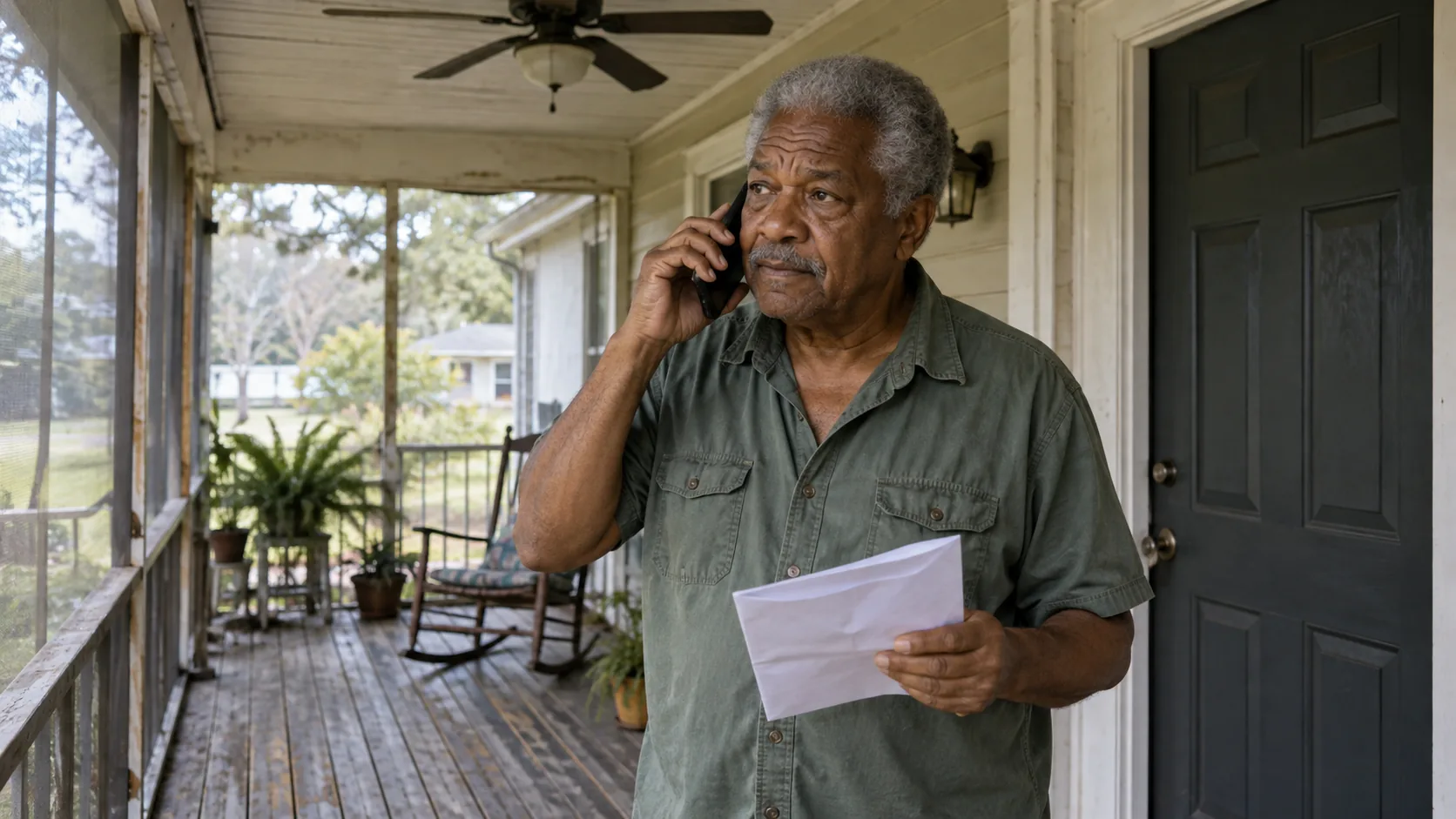
Make the crisis inquiry about the current bill, not an old season banner
Editorial analysis. Identify the parish-serving agency and explain whether the immediate problem is an overdue bill, a pending disconnection or an equipment problem. Match the current bill, service address, recent income evidence and any disconnection notice. Ask the agency which current route applies and what else it needs; the statewide page directs crisis requests to local providers rather than its online application.
Record an appointment or document request separately from an award and from the utility’s own payment arrangement. If the account or address information differs across documents, explain that mismatch before assuming the packet is complete. The page combines an online-closed message with past cooling-period notices. Those banners cannot establish today’s parish funding or a hold on disconnection. Ask both the agency and utility about their respective next steps, and keep any dated response with the notice.
Public-guidance check, October 23, 2026: we read LHC’s energy page and parish provider directory. No intake slot, current funding, repair, award or utility hold was verified.
Housing lists and emergency help are different routes
HUD’s Louisiana directory identifies local housing authorities, rental resources and homelessness services. Use the authority serving the property or area to check a specific public-housing or voucher list. A rental-search website is useful for leads but does not certify a vacancy, rent subsidy or your place on a list.
If already waiting, update your contact information through the responsible authority. If an immediate eviction or shelter problem exists, explain that separately to the local service provider; a long-term housing application is not an immediate rent payment. Ask property managers about their own application, screening and subsidy arrangements instead of assuming one statewide application covers every property.
Use the current HiRE weekly instructions
The benefit-rights guide revised August 2026 explains identity verification, HiRE and weekly benefit requests. File the first weekly request the Sunday after applying. If Sunday or Monday is missed, the current guide permits submission before Saturday at 11:59 p.m. Central Time. An older indexed version gives different first-week timing; use the current guide and instructions shown for your claim.
Keep filing the required weekly requests while wage information or a redetermination is being reviewed. Report work and gross earnings for the week worked, even if not paid yet. Maintain the required work-search record and follow any agency-confirmed exception. A monetary determination alone is not a payment guarantee. Upload requested evidence and retain each weekly confirmation; updating a postal forwarding address does not update HiRE automatically.
Resolve one outstanding action at a time
Keep the receipt, notice, document period and deadline together for each program. Ask which specific item prevents a decision and where it belongs. If challenging a formal decision, use that notice’s appeal instructions promptly; a general inquiry should not be assumed to extend the appeal deadline. Keep a copy of the request and evidence of delivery.
Sources and access limits
The linked LDH, Education CAFÉ, LHC, HUD and Louisiana Works materials are the primary sources used here. Some government pages restrict automated retrieval; official indexed evidence supported those distinctions without treating access errors as broken visitor links. Local funds and individual decisions remain unverified until the agency confirms them. For another jurisdiction, use the state directory instead of transferring Louisiana’s program names or filing schedule.