

Nevada’s benefit systems cover different needs: Access Nevada handles several assistance applications, WIC uses its own clinics, energy assistance has specific submission and prior-award rules, and unemployment uses Claimant Self Service. An account, application receipt, care certificate and weekly benefit request each prove a different step.
Reviewed October 22, 2026. This independent guide explains current official routes and useful follow-up questions. It does not determine eligibility, reserve funding or replace the decision notice sent for your household.
Match your need to the next task
| Need | Starting route | What to confirm next |
|---|---|---|
| Food or family cash | Access Nevada and DSS program instructions | Interview, evidence and the separate program decision |
| Health care | Medicaid or Nevada Check Up through the official application | Correct category, renewal date and any quarterly family premium |
| Child care | Access Nevada or the northern/southern application route | Waiting status, certificate, provider and family share |
| Heating or cooling bill | DSS Energy Assistance Program | Required household records and prior award date |
| Rent or lost wages | Local housing authority; NUI Claimant Self Service separately | Specific housing list or weekly unemployment certification |
A useful first step is to list the actual problem and deadline. A utility shutoff notice needs a different response from a long-term housing wait. If work has stopped, a weekly unemployment certification remains separate from applying for SNAP. Keep each confirmation and the next requested action together so an unfinished step does not disappear inside a general paperwork folder.
SNAP: follow the application through its interview and decision
Use Access Nevada and the DSS after-application instructions. Keep the submission receipt and complete the interview or further verification requested for your case. A saved draft is not a submitted application, and a prescreening result is not a benefit award.
After assessment, the decision notice identifies eligibility, the amount and the certification period. If an interview is missed, contact the office promptly to reschedule rather than assuming the application will complete itself. Ask which missing document and income period are relevant. Do not submit duplicate applications merely because the EBT balance has not changed.
The current ABAWD guidance distinguishes activity requirements from exemptions, qualifying circumstances and any applicable waived area. Prior countable months from another state may matter. Ask the worker how the rule applies to the individual rather than treating every adult’s age or one general work-registration statement as the full assessment. A card problem or rejected transaction is also different from an eligibility decision.
WIC requires a clinic appointment
Nevada WIC directs applicants to find a clinic and schedule an assessment. Its appointment guidance asks for identification, residency and income evidence. WIC serves eligible pregnant or postpartum participants, infants and young children with nutrition services and specified foods. Applying for SNAP does not schedule that visit. Vendor enrollment announcements concern stores, not a household’s application window.
Medicaid and Nevada Check Up: identify the person and program
Use the health application route linked through the DSS applications page or Access Nevada. Describe the household accurately and ask which coverage category applies to each person. A child’s eligibility can differ from an adult’s; do not assume an adult’s result means the entire family is ineligible.
The September 29, 2026 Medicaid announcement describes changes beginning January 1, 2027 for certain adults, including community-engagement requirements or exceptions. It identifies the first applicable 2027 redetermination as an important date and says some adults move to six-month reviews after the first renewal on or after January 1. That is not a statement that every member loses coverage that day.
Check your actual review date, contact information and requested evidence. Ask which activity period or exception applies before gathering records. Children and other coverage categories should not be treated as the affected adult group. Continue responding to ordinary renewal notices while preparing for a future change.
Nevada Check Up premiums are quarterly and per family
The Nevada Check Up page identifies a case-specific quarterly family premium due in January, April, July and October, with possible prorating from the eligibility date. It is not a monthly charge for each child. Use the notice and the official payment link to identify the amount owed; contact the program if the invoice or enrollment details appear wrong.
Keep the payment record separately from the application receipt. Paying an invoice, selecting a plan and answering an eligibility review are different actions. If the mailing address changes, update the case so notices reach the household; forwarding ordinary mail alone should not be treated as confirmation that every program updated its records.
TANF includes programs with different obligations
DSS’s TANF categories distinguish NEON households with a work-eligible individual from Child-Only cases and other assistance. NEON combines cash and employment-related support. Child-Only eligibility depends on the actual household circumstances; it should not be treated as a general payment to every caregiver.
A Self-Sufficiency Grant addresses eligible immediate employment needs as a lump sum. The Temporary Program is a limited response to an episode of need and requires the specified approval. The Loan Program involves accepting full repayment responsibility in writing. These options should not be presented as several unrestricted grants that every family can collect together.
Ask which program is being considered, how prior assistance affects the case and which work or reporting responsibilities apply. Before accepting an option, clarify any repayment, participation or future-eligibility consequences. Confirm authorization for child care or other support before paying for it and assuming reimbursement.
Use the route for northern or southern Nevada
The current parent page offers Access Nevada and different assisted routes for southern and northern families. Southern applications can go through DSS’s listed channels; northern families can use Access Nevada or the Children’s Cabinet contact specified there. Follow the current official contact instead of assuming an older contractor handles every area.
The program page says updated income limits apply to initial applications and applicable renewals beginning October 1, 2026. An older FAQ’s October 2024 threshold discussion should not be copied as the date of the latest chart. Use the chart and certificate for the relevant review.
The child care FAQ explains waiting, family copayments and provider charges. Ask whether the case is waiting, approved or ready for a provider authorization. Confirm the certificate, care dates, schedule and remaining charges before relying on payment. A provider’s vacancy is not proof a funded slot has been awarded, and a family copayment is not automatically charged once per child.

Send the question to the team that can resolve it
Editorial analysis. Write down whether the unresolved issue is the subsidy case, a reported change or finding a provider. The current parent page separates case inquiries from help locating care. A response about an available provider does not establish that the family has moved off the subsidy waiting list. Conversely, a case update does not reserve a place matching the child’s age and hours.
Keep the original application confirmation and use the current regional route when asking about that record. The published waitlist explanation gives no fixed wait; a monthly review does not mean an individual offer next month. When the agency requests information, identify the child, relevant date and outstanding item in a private message through the official channel. If a certificate arrives, compare its dates and authorized arrangement with the provider’s proposed start and family charges before making commitments. A newsletter subscription or general program update is not a personalized case decision.
Public-guidance check, October 23, 2026: we read DSS’s current parent contacts, regional routes and waiting-list instructions. No case response, waiting position, certificate or provider place was tested.
EAP: check the prior award before reapplying
The Energy Assistance application page links current paper forms and assisted submission methods alongside its online route. It requests recent income for everyone in the household, identity records and current heating or cooling bills. If the utility account is in another person’s name, the page describes written authorization from that account holder.
Prior recipients should check their last award and the current reapplication instructions. The application page says they generally cannot reapply until approximately 11 months after the last benefit. Do not treat the start of a new calendar year as automatic permission to obtain another credit. Ask the office how the certification and program-year rules apply to your prior award.
The program’s annual fixed credit is ordinarily paid to the energy provider and appears on the bill. It is not a promise to cover every charge or an immediate cash payment to the household. For a shutoff, explain the deadline and ask about the appropriate urgent route while also contacting the utility. A pending application alone does not establish that service will remain connected.
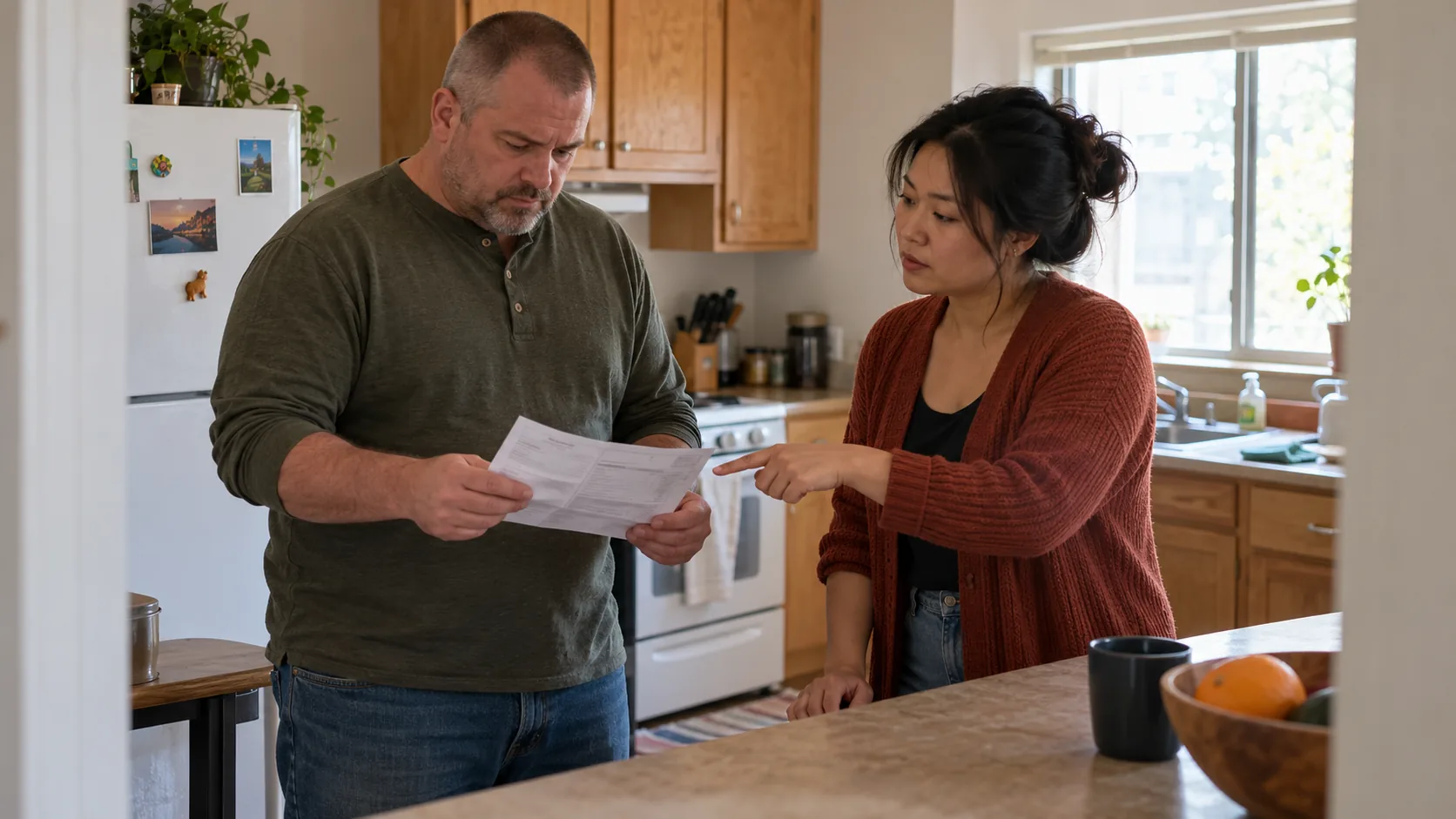
Resolve the account-name mismatch before treating the file as complete
Editorial analysis. Compare the applicant’s name with the latest heating or cooling bill. If they differ, EAP asks for a statement from the named account holder authorizing the application, including the required contact details and signature. A bill copy alone does not supply that permission. Ask about the actual arrangement rather than changing the name on a document or assuming another household’s paperwork fits.
Put the income period for every household member beside the account evidence. If reported expenses exceed income, explain how the household meets its needs and ask what supporting proof is appropriate. Prior recipients should also identify the last benefit date before asking whether reapplication is due. These are different completeness questions: another copy of the utility bill will not answer a missing income explanation or an early repeat request. Keep the submission receipt and any later verification request separately from the provider’s eventual credit.
Public-guidance check, October 23, 2026: we read DSS’s EAP application-evidence and prior-recipient instructions. No account authorization, household assessment, award or payment was tested.
Housing applications belong to the responsible authority or property
HUD’s Nevada directory links local housing authorities, properties and immediate services. Access Nevada does not automatically place a family on every voucher or public-housing list. Identify the authority serving the area and the particular program before completing an application.
Ask whether that list is accepting applications, which preferences apply and how to update an existing record. An apartment search result is not proof of vacancy or subsidy approval. If the problem is immediate shelter or eviction-related help, explain that separately from a long-term wait. Keep each housing confirmation and contact-update process with the household’s records.
Claimant Self Service is separate from Access Nevada
The DETR unemployment guidance explains weekly eligibility certification, work and earnings reporting. Use the current NUI Claimant Self Service route rather than a benefits-application account or an employer tax login. Opening a claim does not complete later weekly certifications.
Follow the dates shown for the available week, report ordinary gross earnings in the week worked and retain the confirmation. A submitted job application elsewhere is not evidence that the weekly benefit request was filed. Ask DETR promptly about a missing week, incorrect answer or reopening step rather than assuming another initial claim will correct everything.
Make each contact resolve a specific question
Record the program, case number, requested item, period covered, deadline and delivery confirmation. Ask whether a decision is waiting for an interview, document, provider selection, premium or weekly filing. If a formal decision appears wrong, use the notice’s review or appeal instructions promptly. An informal inquiry should not be assumed to extend the appeal deadline.
Official sources and limits
The linked DSS, Medicaid, WIC, HUD and DETR materials support these routes. Some official pages or documents restricted automated access; that alone does not establish broken visitor links. Local funds, provider places and personal decisions require the responsible office’s confirmation. For another jurisdiction, use the state directory rather than transferring Nevada’s quarterly premiums, care contacts or annual energy-credit rules.